






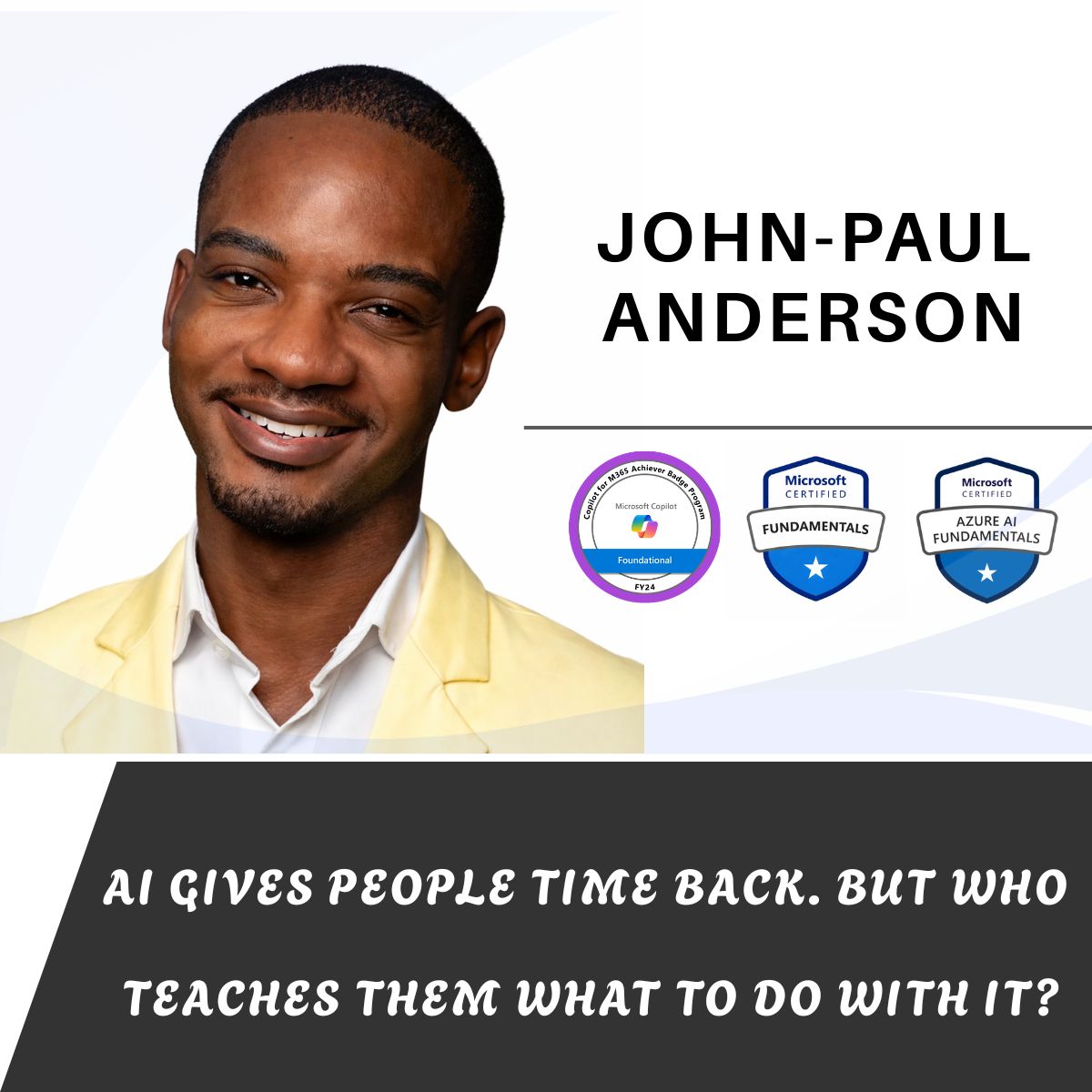

One of the biggest gaps in the AI conversation right now is that we keep talking about time saved, but not enough about what people are supposed to do with that time once they get it back. AI is already being used widely at work, and Microsoft and LinkedIn reported that 75% of knowledge workers were using generative AI in 2024. McKinsey later found that the bigger barrier to getting value from AI is not employee resistance, but leaders not steering fast enough.
That matters because saving time is only the first event. It does not automatically turn someone into a better leader, a better seller, or a better manager. It just creates capacity. And capacity, if nobody shapes it, usually gets filled by old habits: more tasks, more noise, more motion, more of the same. Gartner’s 2026 HR survey points to this exact kind of gap. In a hypothetical hour freed up by AI, 55% of HR leaders said they would want employees to spend that time on special projects outside their core role, but only 28% of managers said they would prioritize that.
That is why I think the real question is no longer, “Is AI saving time?” In many cases, it is. The real question is, “Who is teaching people how to convert saved time into higher-value behavior?” McKinsey’s workplace research and the World Economic Forum’s 2025 skills outlook both point to the same broader truth: technology value depends on leadership choices, skill building, and organizational development around the tool, not just access to the tool itself.
If nobody teaches that conversion, people default. A leader may use AI to clear admin faster, but still avoid coaching. A seller may use AI to write follow-up emails faster, but still not ask better questions in the meeting. An executive may get more capacity, but still spend it reacting instead of thinking. The opportunity is not just faster work. It is better judgment, better conversations, better prioritization, better coaching, and better stewardship.
Deloitte’s 2026 reporting on high-performing teams in the AI era makes that point clearly: the future of strong teams is human-led and AI-powered, with human skills still doing the heavy lifting.
So what should readers do with this?
First, stop treating time savings as the finish line. Treat them as a leadership signal. If AI has reduced the time needed for reporting, drafting, summarizing, research, or admin, ask what higher-value behavior should now increase instead. More coaching? Better customer conversations? Stronger account planning? Better decision-making? If that next step is not named, the gain will likely be absorbed and forgotten. Gartner’s manager and HR findings suggest that this “redeployment gap” is already showing up in practice.
Second, build a habit of explicit reinvestment. Teams should not just say, “AI saved us time.” They should say, “AI saved us time, so here is where we are reinvesting it.” That could mean one more coaching conversation per week, deeper prep before sales meetings, sharper deal reviews, more time spent unblocking a direct report, or more thoughtful follow-up with customers. Without deliberate reinvestment, efficiency often turns into drift instead of growth. McKinsey’s findings on leadership steering support that point.
Third, teach people the missing human layer. Better leadership and better selling are learned behaviors. Asking stronger questions is learned. Listening without rushing is learned. Coaching instead of controlling is learned. Prioritizing what matters instead of what is loudest is learned. The World Economic Forum’s 2025 research shows employers continue to place growing importance on human capabilities alongside digital ones, especially as work becomes more technology-enabled.
This is where I think Lani Phillips’ Modern Mentoring is relevant. Her platform is built around sharing wisdom, offering support, and empowering a new generation of leaders at scale. That matters because the gap many organizations now face is not just access to AI tools. It is access to guidance, perspective, and developmental support that helps people grow into the kind of leaders and professionals who know what to do with the capacity AI creates. Modern Mentoring is useful to point people toward in the meantime because it directly addresses that human development side of the equation.
In other words, I do not think the next phase of this conversation is purely technical. It is developmental. We need fewer conversations that end at “look how much time we saved,” and more that ask, “What are we becoming with the time we got back?” Because if nobody teaches that conversion, AI will mostly create faster workers. If someone does, it can help create better ones.
If you want to explore one example of the kind of leadership development this moment needs, Lani Phillips’ Modern Mentoring is a strong place to start. While many companies are still figuring out how to convert AI-enabled efficiency into stronger human capability, platforms like Lani Phillips’ Modern Mentoring offer a practical bridge in the meantime by focusing on perspective, support, and leadership development at scale.
Lani Phillips Modern Mentoring:
References
- Microsoft and LinkedIn, 2024 Work Trend Index: AI at Work Is Here. Now Comes the Hard Part: https://www.microsoft.com/en-us/worklab/work-trend-index/ai-at-work-is-here-now-comes-the-hard-part
- Microsoft press release: https://news.microsoft.com/source/2024/05/08/microsoft-and-linkedin-release-the-2024-work-trend-index-on-the-state-of-ai-at-work/
- McKinsey, Superagency in the Workplace: Empowering People to Unlock AI’s Full Potential: https://www.mckinsey.com/capabilities/tech-and-ai/our-insights/superagency-in-the-workplace-empowering-people-to-unlock-ais-full-potential-at-work
McKinsey PDF:
- Gartner HR Survey, March 4, 2026:
- World Economic Forum, Future of Jobs Report 2025 and Skills Outlook.