







We spend most of our lives trying to manage everything around us — work, relationships, expectations, outcomes.
But very few people stop to consider this:
Your number one job in life is not performance — it’s emotional regulation.
Because when your emotions are off, everything else follows:
- You misread situations
- You react instead of respond
- You take things more personally than they are
- You feel frustrated, misunderstood, or drained
Sometimes it’s not even work that triggers this.
Sometimes it’s something small.
A conversation.
A tone.
A moment in a relationship that didn’t go how you expected.
If you’ve ever found yourself in any of these situations, this is for you:
- You’re holding a grudge and can’t let it go
- You’re working toward something with someone, but personal friction gets in the way
- You feel like your partner isn’t giving you what you need
- You receive feedback and immediately feel annoyed or defensive
- You get frustrated by someone’s behavior and don’t know how to handle it
The issue might not be the situation.
It might be your emotional state.
Understanding Your Emotional State
There’s a concept developed by psychiatrist David R. Hawkins called the Scale of Consciousness, which maps emotional states from low to high.
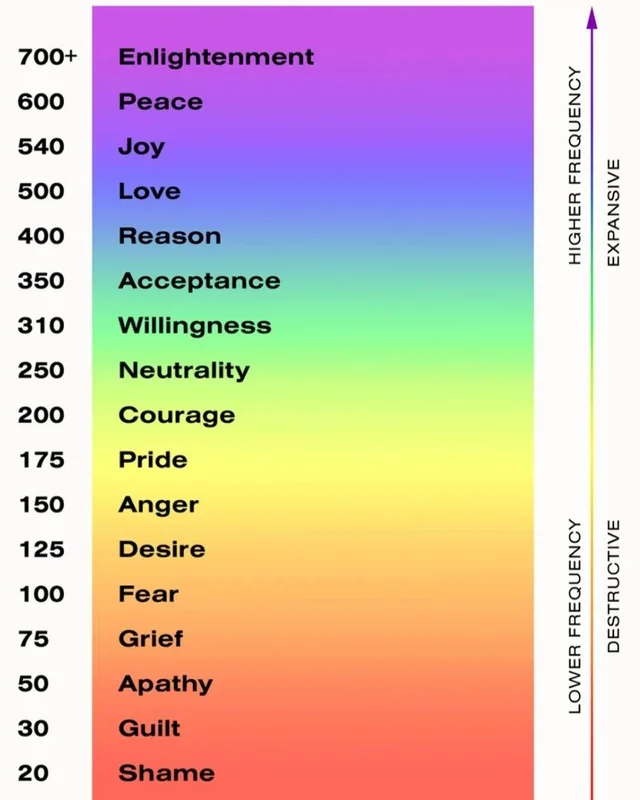
At the lower end, you’ll find emotions like:
- Shame
- Guilt
- Fear
- Anger
These are contractive states — they narrow your thinking and make situations feel heavier than they actually are.
At the higher end:
- Courage
- Acceptance
- Love
- Peace
These are expansive states — where clarity, patience, and better decisions come from.
The same situation can feel completely different depending on where you are emotionally.
The Foundation: Fill Your “Buckets” First
Before you try to fix people or situations, check your internal state.
This idea is inspired by Julia Cameron’s work in The Artist’s Way, where she emphasizes that your creativity — and by extension, your well-being — depends on how well you nurture different areas of your life.
Think of your life as having seven key “buckets”:
- Exercise
- Family connection
- Friendship connection
- Spirituality
- Romance / intimacy
- Creativity
- Work / productivity
Every day, your job is to do something — even small — to fill at least one of these.
Because:
Empty buckets create reactive people. Full buckets create grounded people.
If you haven’t:
- Moved your body
- Spoken to someone you love
- Created something
- Felt connected
- Made progress on something meaningful
Then you might already be running low… before anything even happens.
5 Tips to Regulate Your Emotions in Real Life
1. Check Your State Before You React
When something triggers you, pause and ask:
Am I reacting to this situation — or to how I already feel?
Sometimes it’s not the moment.
It’s your state going into the moment.
2. Identify Which Bucket Is Empty
Ask yourself:
What haven’t I given myself today?
It might be:
- Rest
- Movement
- Connection
- Progress
- Expression
Fixing that one gap can shift everything.
3. Pause Instead of Performing
You don’t need to respond immediately.
Take a moment.
If someone notices, keep it simple:
- “Give me a second, I’m thinking.”
That pause is emotional control — not weakness.
4. Use a Mental Reset When Overwhelmed
If you feel yourself getting carried away, take a small reset:
- Think about a song you love
- Shift your focus briefly
- Breathe and step back
It creates space between feeling and reaction.
5. Focus on Regulating Yourself, Not Controlling Others
You can’t control how people behave.
But when you regulate yourself:
- You become calmer
- You think clearer
- You create safer interactions
And sometimes — not always, but sometimes — people soften around that.
Your stability changes the dynamic more than forcing a response ever will.
5 Questions to Ask Yourself When You Feel Triggered
Use these in real time:
- Where am I emotionally right now?
- Which bucket is empty?
- Am I reacting to the person — or my expectation of them?
- What would this look like if I were calmer?
- What do I actually need right now?
Final Thought
There’s a lot happening in life.
A lot of emotion.
A lot of moments that can pull you out of yourself.
But here’s the truth:
It’s rarely ever as serious as it feels in the moment.
Your emotions can make something feel urgent, heavy, overwhelming.
But when you slow down…
when you regulate…
when you come back to yourself…
You realize:
- Not everything needs a reaction
- Not everything is personal
- Not everything is permanent
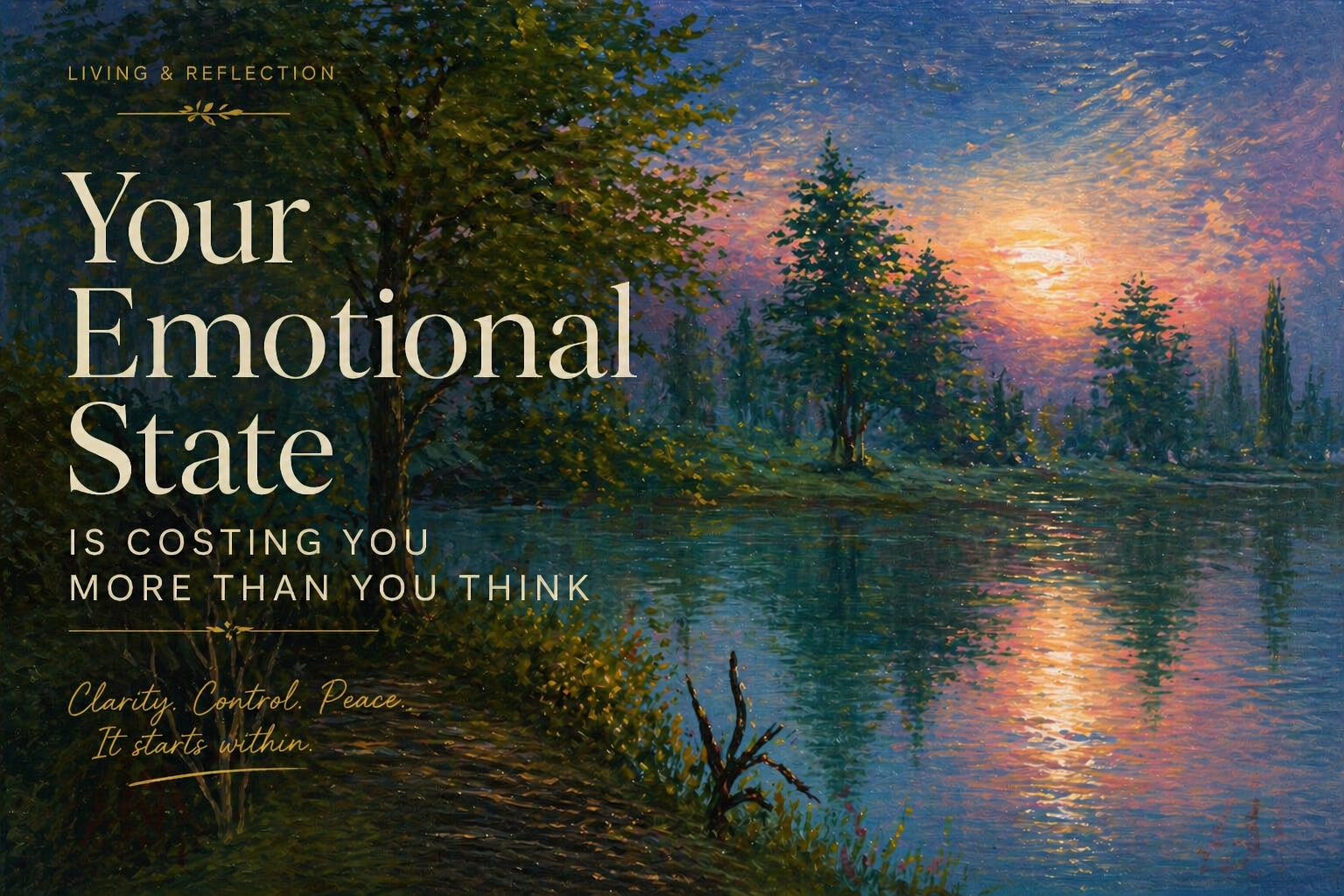
From time to time, I’ll include my own artwork in these pieces — not as decoration, but as reflection
The featured image above is one of my own paintings.
It’s how I process — slowing things down, observing, and returning to stillness.

It’s never that serious — but your ability to regulate yourself is.
And that’s the real work.