







There’s a leadership profile that gets celebrated far too often.
The aggressive operator.
The loud decision-maker.
The one who dominates meetings and forces outcomes.
It looks like control.
It feels like strength.
But in practice, it often creates noise, friction, and hidden inefficiencies.
The best leaders in high-performing businesses rarely look like that.
They’re calm.
They’re kind.
They’re facilitative.
And they drive better outcomes.
The Leadership Profile Most CEOs Misread
There’s a type of leader that gets underestimated in organizations.
They’re not performative.
They don’t need to assert dominance in every room.
They don’t create unnecessary tension to prove authority.
Instead, they:
- negotiate firmly when it matters
- stay persistent on priorities
- protect their time with discipline
- and quietly drive the most important initiatives forward
They often champion areas others overlook—culture, alignment, long-term growth segments.
Not because they’re “soft,” but because they understand where real leverage sits.
This is not passive leadership.
It’s controlled leadership.
The Blind Spot
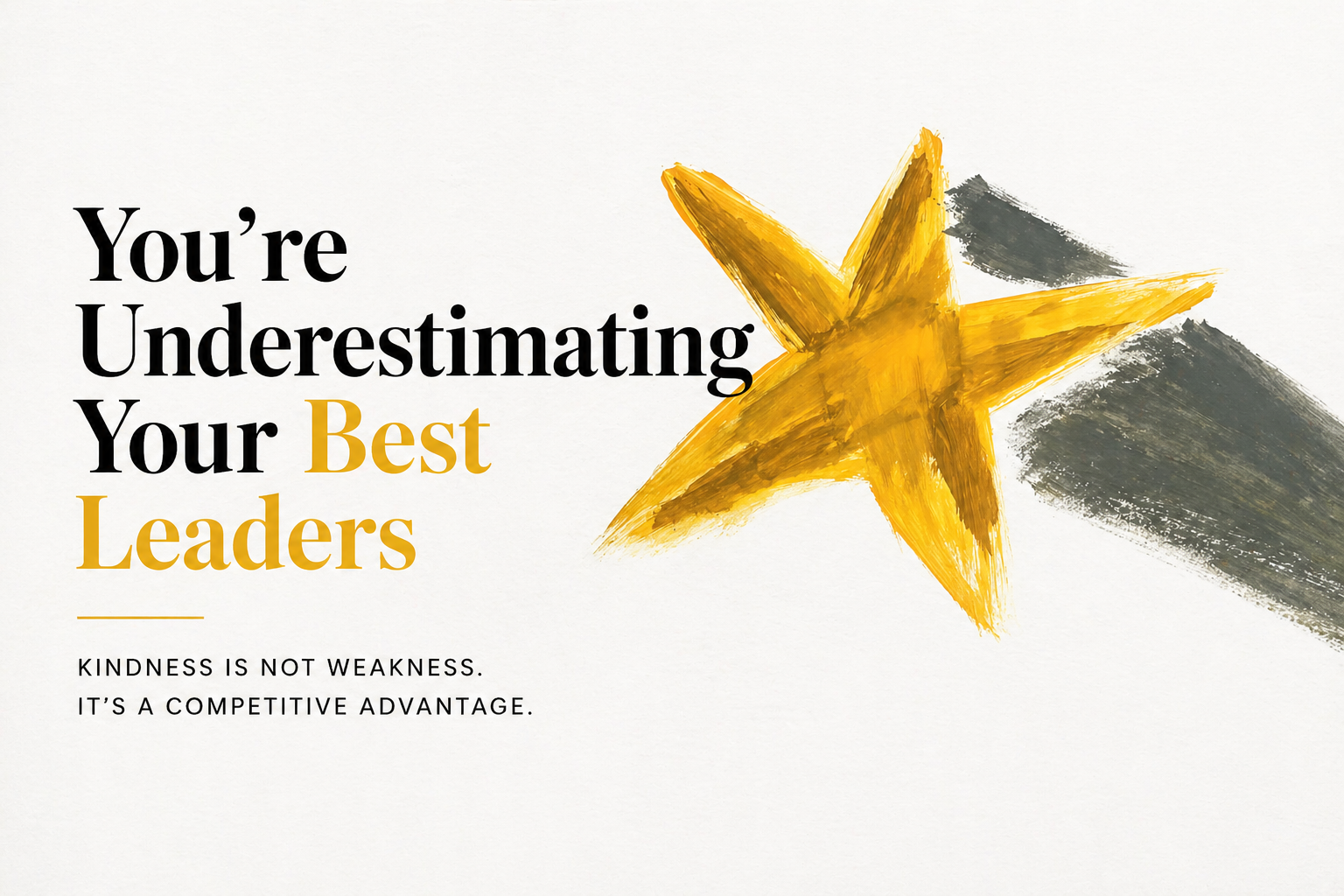
Many CEOs misread kindness as weakness.
They assume:
- things are being overlooked
- standards aren’t being enforced
- decisions are being delayed
But what’s actually happening is different.
These leaders are highly observant.
They see the dynamics others miss.
And when they don’t act immediately, it’s usually intentional.
They’re:
- assessing risk
- protecting key relationships
- allowing better information to surface
- or choosing the right moment to intervene
That restraint isn’t a lack of control.
It’s precision.
Why This Drives Better Performance
Aggressive leadership often creates short-term compliance.
Facilitative leadership creates long-term commitment.
That distinction matters.
Because commitment drives:
- faster execution (less resistance)
- better decisions (more input, less blind spots)
- stronger retention (people stay where they feel valued)
- higher trust (less internal friction)
And ultimately—better business performance.
The leader who builds trust doesn’t need to force outcomes.
The system moves with them.
What Actually Defines a Strong Leader
At a foundational level, the most effective leaders are anchored in a consistent value system:
- People – They understand performance is driven through others, not over them.
- Honesty – They create clarity, not confusion.
- Collaboration – They leverage the organization, not just themselves.
- Integrity – Their decisions are consistent and trusted.
- Transparency – They reduce uncertainty across the business.
- Inclusion – They bring the right people into the conversation early.
These aren’t soft traits.
They are operational advantages.
The Real Risk
If you misread this leadership style, you’ll do one of two things:
- overlook your most effective leaders
- or replace them with louder, less effective ones
Both are costly.
Because what you lose isn’t just personality.
You lose:
- trust in the system
- speed of execution
- and long-term stability in your organization
The Takeaway
The best leaders don’t need to prove power.
They operate with control, clarity, and discipline.
They know when to push.
They know when to wait.
And they understand that people—not pressure—drive performance.
If you’re serious about scaling without becoming the bottleneck,
you need more of these leaders in your business.
Not fewer.